
Sample Report
A walkthrough of how a Nuxvelo thermal survey report is structured, what it contains, and how findings are presented to building communities.
What the report contains
The thermal survey report is structured to serve multiple audiences — from the building administrator who needs technical detail to the co-owner who needs to understand why the heating bill is high.
Executive Summary
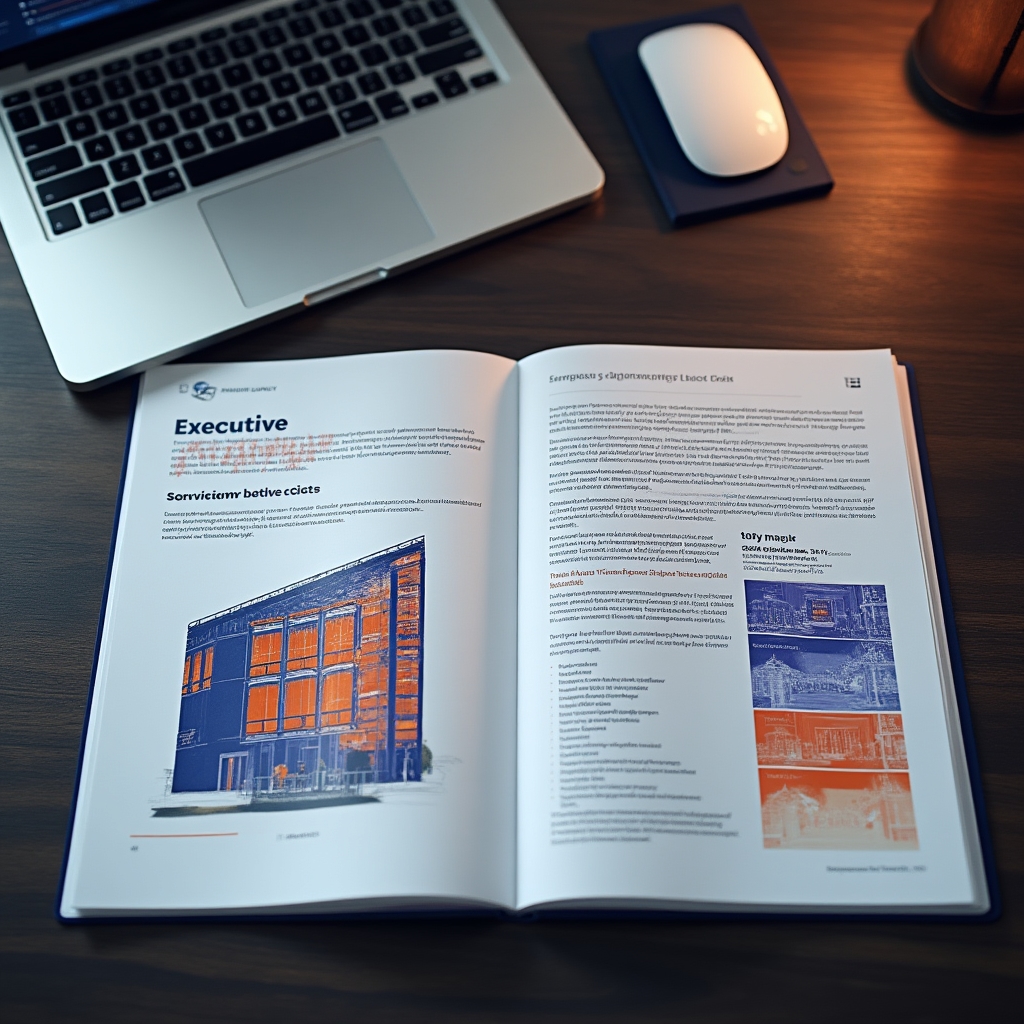
The report opens with a plain-language overview of the survey scope, the date and conditions under which it was conducted, and a summary of the main categories of anomaly found. This section is written for non-technical readers and provides the essential context for understanding the findings that follow.
The summary includes a simplified floor plan or facade elevation diagram with the general zones of concern indicated, giving readers an immediate spatial orientation before they encounter the detailed findings.
Visual Facade Map — Problems in Red
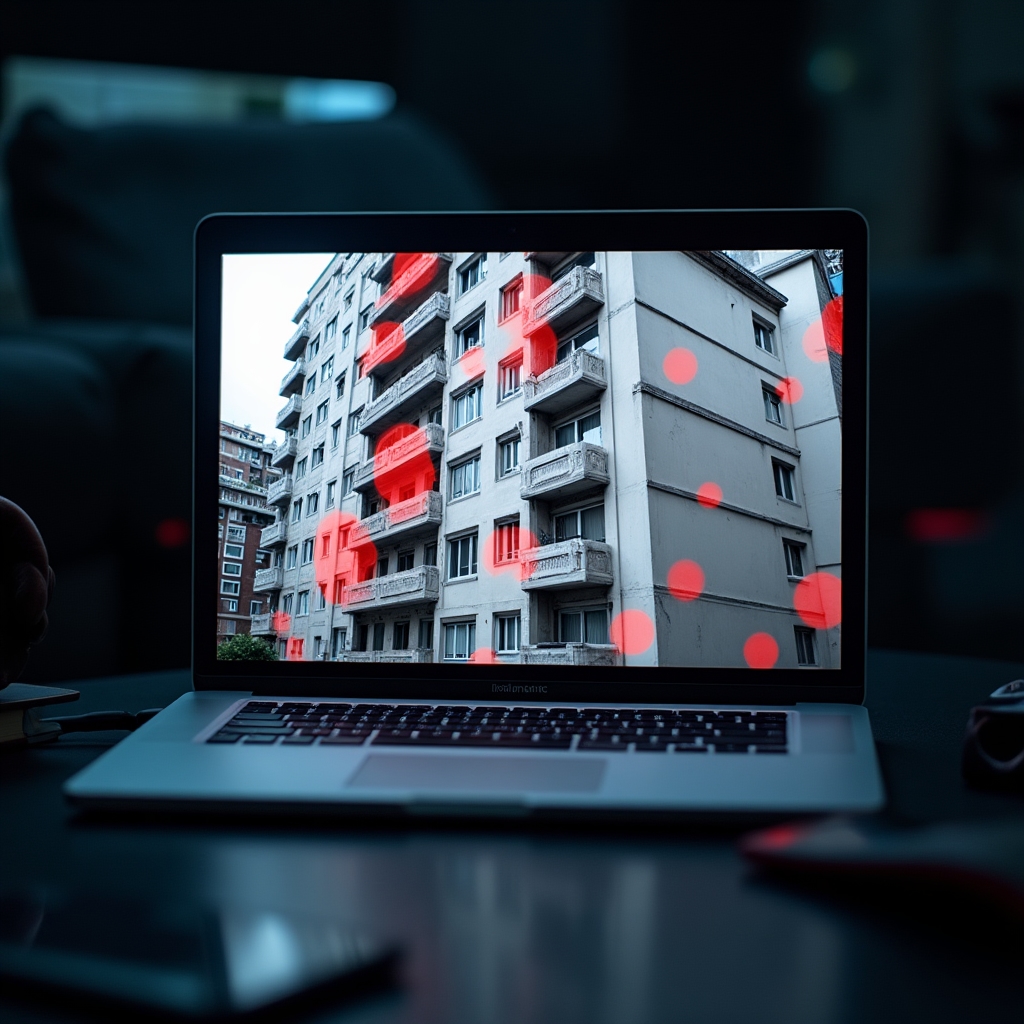
The central section of the report presents the building's facade photographs with every identified thermal anomaly marked directly on the image in red. Each marking is numbered and corresponds to a finding entry in the detailed section.
This visual map is the most immediately impactful part of the report. Seeing the actual building photograph — a familiar image — with problems literally painted in red makes the findings concrete and undeniable. Co-owners who might question abstract data find it difficult to dispute what they can see on a photograph of their own building.
Infrared Image Pairs
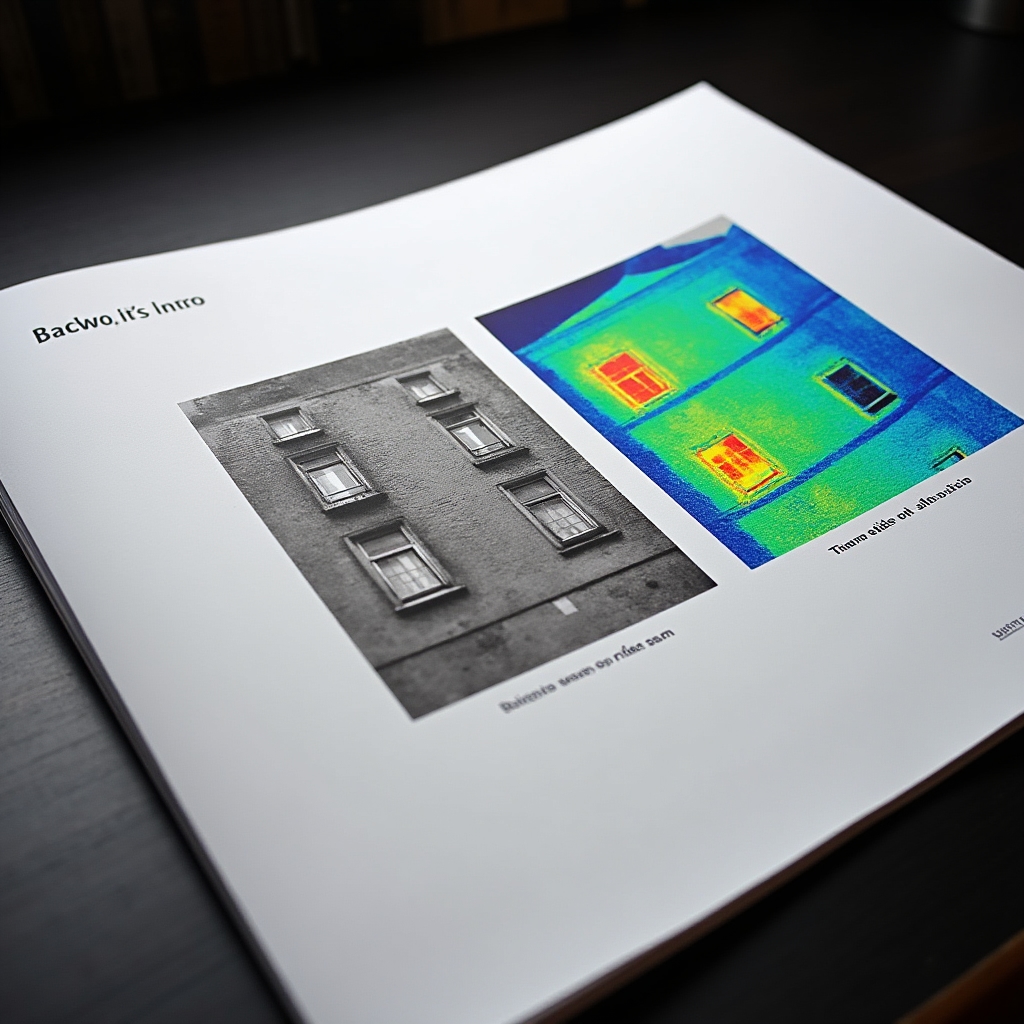
For each identified anomaly, the report presents a side-by-side comparison: the visible-light photograph of the specific facade zone alongside the corresponding infrared thermal image of the same area. This pairing allows readers to see both what the area looks like normally and what the thermal camera reveals.
The infrared images are presented with a standardized color scale — warm areas appear in orange and red tones, cooler areas in blue — with the temperature range indicated. Each image pair is labeled with the finding number, location description, and the measured temperature differential at the anomaly.
Detailed Finding Entries
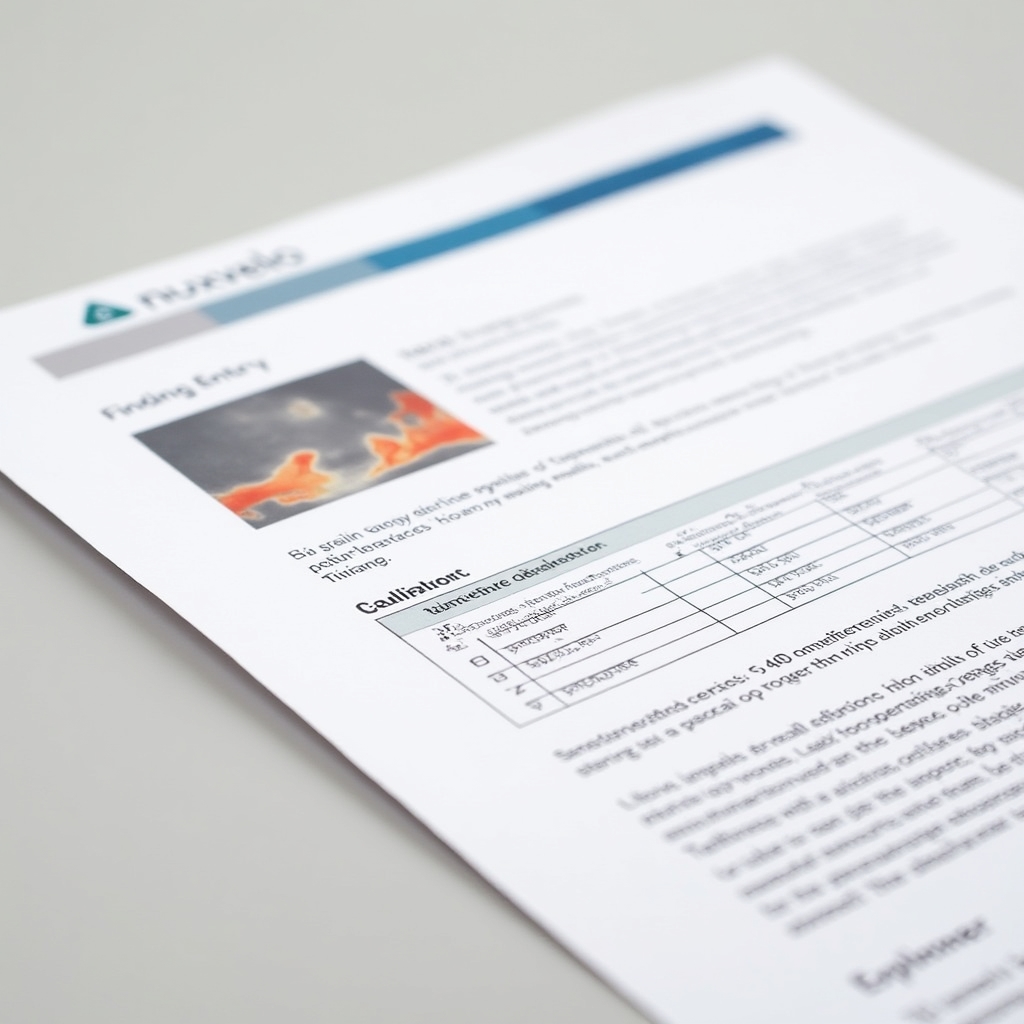
Each thermal anomaly identified in the survey receives a structured finding entry containing: a sequential reference number, the anomaly type and classification, its precise location on the building (floor level, facade orientation, distance from reference points), the measured temperature differential, and a plain-language description of what the finding represents.
Finding entries do not include prescriptive repair specifications — that determination requires a separate structural or building systems assessment. Instead, findings describe the nature of the thermal anomaly and the type of building element or condition typically associated with it, providing the information needed to engage appropriate specialists.
Who reads the report
The report is structured to be useful to different people involved in residential building management decisions.
Building Administrators
The technical detail, precise location data, and temperature differentials provide the information needed to brief specialist contractors and obtain accurate intervention quotes.
- Precise anomaly location data
- Temperature differential measurements
- Full infrared image archive
- Anomaly classification by type
Building Committees
The visual facade map with red markers and plain-language summaries allow committee members to understand and communicate findings without technical expertise.
- Visual red-marked facade photograph
- Plain-language finding descriptions
- Executive summary for meetings
- Structured finding list
Co-owners
The building photograph with visible red markers makes thermal problems tangible and understandable to co-owners who may be skeptical about heating costs or proposed maintenance works.
- Familiar building photograph as base
- Visible, intuitive problem marking
- Accessible explanatory language
- Context for heating cost discussions
Request a thermal survey for your building
Contact us to discuss your building's characteristics and what a thermal survey and report would involve.
Contact Us